Search This Blog

Showing posts with label Artificial Intelligence. Show all posts

16 May 2026

The Global Chip War: Why Taiwan Rules Tech, How China Beats Sanctions, and What the Future Holds


The Global Chip War: Why Taiwan Rules Tech, How China Beats Sanctions, and What the Future Holds

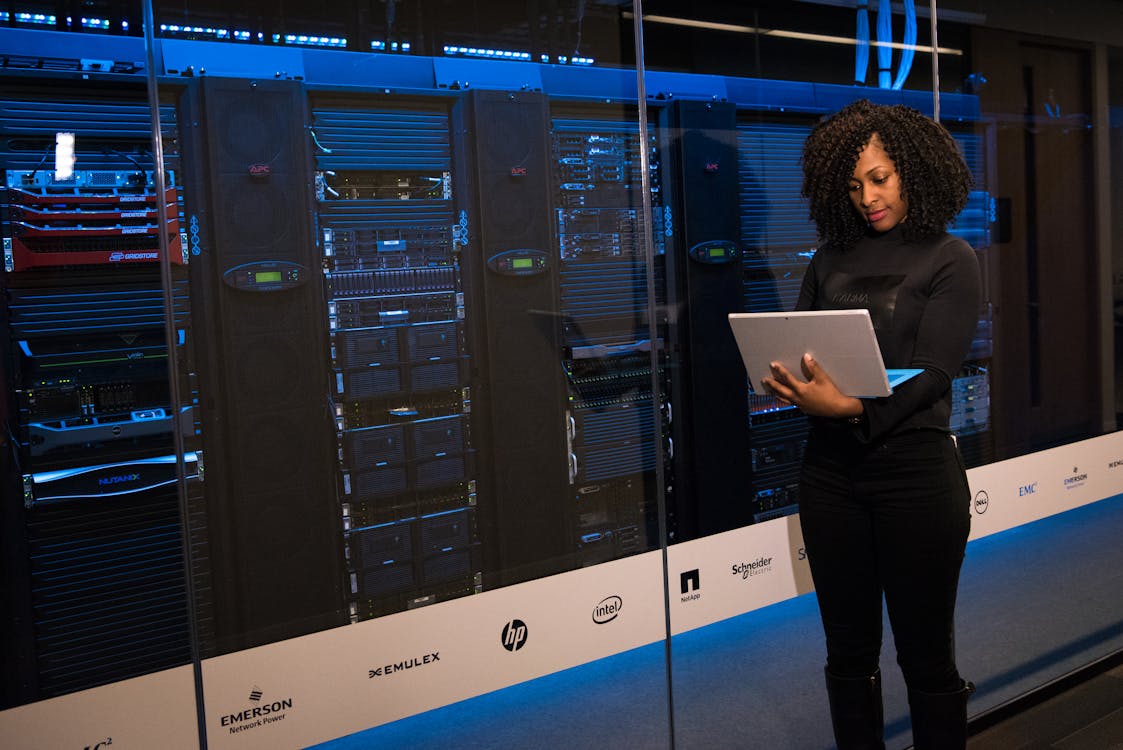
Every single day, you interact with technology that relies entirely on integrated circuits (ICs), or microchips. From the smartphone in your hand and the laptop on your desk to advanced medical equipment and electric vehicles (EVs), these microscopic pieces of silicon are the invisible nervous system powering our modern world.

Yet, a staggering majority of people do not realize that the entire global tech economy hinges on a single, self-governing island: Taiwan.

Semiconductors have shifted from quiet electronic components into the absolute epicenter of global geopolitics, national security, and trade friction. This deep dive explores Taiwan's unprecedented dominance, why global superpowers cannot easily replicate it, and how the shadow battle over silicon will shape our digital tomorrow.

The Global Chip War: Why Taiwan Rules Tech, How China Beats Sanctions, and What the Future Holds


1. The Secrets Behind Taiwan's "Silicon Shield"

Taiwan manufactures over 60% of the world's microchips and a jaw-dropping 90% of the most advanced processors powering AI and flagship smartphones. This level of dominance is not a stroke of luck; it is the culmination of four decades of hyper-focused state strategy and industrial engineering, spearheaded primarily by TSMC (Taiwan Semiconductor Manufacturing Company).

+--------------------------------------------------------------------------------------+

|                     TAIWAN'S SILICON DOMINANCE        |

|                                                                                    |

|   [ Global Microchips Production ] ------> 60%+                               |

|   [ Advanced Processors (<7nm) ]   --------> 90%+ (Via TSMC)       |

+---------------------------------------------------------------------------------------+


The Pure-Play Foundry Model

Founded in 1987 by Morris Chang, TSMC revolutionized the tech sector by pioneering the pure-play foundry model. Unlike Intel or Samsung at the time, TSMC made a strict promise: we will never design or sell chips under our own brand. By functioning strictly as a neutral, contract manufacturer for global tech giants like Apple, NVIDIA, and AMD, TSMC eliminated competitive conflict. This established absolute trust across the tech ecosystem.

A Hyper-Concentrated Industrial Ecosystem

In Taiwan, the semiconductor supply chain is not scattered across continents; it is tightly packed together. Silicon wafer production, electronic design automation (EDA) specialists, fabrication plants (fabs), testing facilities, and advanced packaging plants sit just a short drive from one another along the western coast. This extreme spatial density creates an unmatched, frictionless ecosystem for production speed, iteration, and efficiency.

Massive, Continuous Capital Investment

Building a modern semiconductor fab is arguably the most capital-intensive venture on Earth, costing upwards of $15 billion to $20 billion per facility. Taiwanese firms continuously reinvest a massive portion of their annual profits straight back into Research & Development (R&D) and state-of-the-art machinery.

Expert Insight: This relentless investment has allowed TSMC to cross the next major threshold ahead of its rivals. TSMC officially commenced mass volume production of its 2-nanometer (N2) node featuring advanced Gate-All-Around (GAA) nanosheet transistors, keeping them generations ahead of global competitors.

The "Silicon Shield"

Because an escalation or conflict in the Taiwan Strait would instantly paralyze the global consumer economy, cloud data centers, and military hardware logistics, global superpowers have a vital, vested strategic interest in protecting Taiwan. This absolute economic dependency acts as Taiwan’s ultimate national security insurance policy—coined the "Silicon Shield."


2. Why the US and China Cannot Easily Replicate This Success

If silicon chips are the new oil, why don't economic giants like the United States and China simply build their own self-sufficient ecosystems? Because advanced chip manufacturing is the most complex, precise industrial process ever attempted by humanity.

      CHIP MANUFACTURING CHALLENGES

         /                       \

        /                         \

  UNITED STATES                  CHINA

  - Exorbitant Fab Costs        - Extreme Export Bans

  - Severe Talent Shortages      - No Access to ASML EUV


The Struggles of the United States

  • Exorbitant Production Costs: Operating a fab in Western regions comes with a massive premium. TSMC has openly noted that manufacturing chips at its new multi-billion dollar facilities in Arizona costs roughly 50% more than doing so back in Taiwan due to construction costs, regulatory overheads, and supply chain fragmentation.

  • Work Culture and Talent Shortages: Modern cleanrooms must run 24 hours a day, 7 days a week, 365 days a year to remain profitable. This requires highly specialized engineers to manage grueling, hyper-precise shift work. The US faces a severe structural shortage of skilled factory engineers willing to adapt to this intensive manufacturing work culture.

The Struggles of China

  • Severe Geopolitical Sanctions: To maintain a technological edge, the US and its Western allies have enforced sweeping export controls on China. These strict blockades prohibit Chinese companies from buying high-end processors or the tools required to design and manufacture them.

  • The ASML Monopoly: To print circuit patterns at advanced nodes like 3nm and 2nm, foundries require Extreme Ultraviolet (EUV) Lithography machines. These buses-sized marvels of engineering are manufactured by exactly one company in the world: ASML, based in the Netherlands. Under intense US diplomatic pressure, the Dutch government has completely banned ASML from shipping these vital EUV machines to mainland China.


3. The Shadow Game: How China is Bypassing Sanctions

Faced with an aggressive technological blockade, Beijing has refused to back down. Pumping hundreds of billions of dollars via state backings like the $47.5 Billion "Big Fund III", China's domestic industry is relying on highly adaptive, alternative methods to sustain its tech sector and power its AI ambitions.

Strategy

Technical Execution

Impact / Result

DUV Multi-Patterning

Pushing older Deep Ultraviolet (DUV) machines to limits using Self-Aligned Quadruple Patterning (SAQP).

SMIC achieved volume production on its 5nm-class N+3 node, powering flagship devices like Huawei’s Kirin 9030.

Advanced Packaging

Stitching multiple older-generation chips (Chiplets) together horizontally or vertically.

Mimics the processing speed of a singular massive processor, bypassing single-die physical constraints.

Smuggling Networks

Moving restricted hardware through small-scale vendors, travelers, and personal luggage.

A thriving underground black market supplying restricted NVIDIA AI chips to domestic firms.

Proxy / Shell Companies

Setting up entities in third-party hubs like Malaysia, Singapore, or the UAE.

Purchases advanced Western design tools and reroutes hardware back into mainland China.

Cloud Computing Leases

Renting high-performance computing power from Western cloud providers (AWS, Azure).

Allows Chinese AI teams to train complex language models on overseas servers without importing hardware.

Software Optimization

Standardizing AI codebases around low-precision formats (like the FP8 format championed by DeepSeek).

Mitigates the "technology tax" of older hardware, maximizing output from domestic accelerators like the Huawei Ascend 910C.


4. Looking Ahead: What Does the Future Hold?

The escalating friction over semiconductors will fundamentally rewrite the rules of the global technology landscape over the next decade.

The Rise of Techno-Nationalism

The era of a seamless, highly globalized tech supply chain is coming to a close. We are accelerating toward a fractured world defined by two distinct tech ecosystems: a Western ecosystem (built by the US, Europe, Japan, and Taiwan) and an independent Chinese ecosystem. In the future, devices, software standards, and AI models from one ecosystem may be completely incompatible with the infrastructure of the other.

China’s Eventual Material Self-Reliance

While sanctions have significantly slowed China down and made production costs 40-50% higher due to multi-patterning yields, they have inadvertently forced the nation to innovate independently. Chinese research labs are aggressively developing non-silicon alternatives—such as graphene semiconductors and photonics (optical computing)—aiming to leapfrog Western silicon lithography entirely.

A Diluted Silicon Shield

Through multi-billion dollar initiatives like the US CHIPS Act and the European Chips Act, Western nations are successfully pressuring TSMC to diversify and build fabs on their sovereign soil. As alternative production hubs in the US, Europe, and Japan gradually scale up operational capacity over the coming years, global reliance on Taiwan's physical island will slowly decrease, fundamentally shifting the geopolitical balance of power in East Asia.

Higher Costs for the Everyday Consumer

Manufacturing chips in high-cost, heavily regulated regions like America and Europe means production expenses will spike. Consumers worldwide should prepare for a macroeconomic shift where smartphones, laptops, smart home appliances, and electric vehicles become noticeably more expensive to compensate for decentralized supply chains.


Final Verdict

Semiconductors are no longer just microscopic components hidden inside plastic casings—they are the ultimate currency of global power. Whoever controls the chip supply chain controls the future of Artificial Intelligence, military dominance, and economic sovereignty.

The Western alliance holds the current high-ground with architectural design and lithography monopolies, but China's brute-force financial backing and engineering workarounds have proven that a technological blockade is incredibly leak-prone.


Join the Discussion

What are your thoughts on the global chip race? Do you think Western sanctions will successfully bottle up China's long-term tech growth, or will China shock the world by achieving total, sanctions-proof semiconductor independence through alternative materials?

Let's discuss your insights in the comments below!


30 March 2026

The AI Paradox: What Happens When Robots Make Everything but No one Can Buy?

The AI Paradox: What Happens When Robots Make Everything but No one Can Buy?

We are currently witnessing the fastest technological shift in human history. Artificial Intelligence (AI) is no longer just a "helper" tool; it is becoming the world’s primary workforce. While businesses are excited about the massive profits, we are heading toward a "glitch" in our global economic system that could change life as we know it.

1. The Great Replacement: Who is AI Replacing?

Initially, we thought robots would only take over factory jobs. However, AI is now mastering tasks we thought were "uniquely human":

  • The Creative Class: Writing, graphic design, and music.

  • The Professionals: Legal research, accounting, and coding.

  • The Service Sector: Customer support, banking, and even medical diagnostics.

2. The Corporate Race for "Infinite Profit"

Companies are rushing to adopt AI for one main reason: The Bottom Line. By replacing human workers with algorithms and robots, businesses can:

  • Eliminate Salaries: No more wages, insurance, or pensions.

  • Work 24/7: Machines don't get tired, sick, or go on strike.

  • Maximise Efficiency: AI makes fewer mistakes and processes data in seconds.

the circular flow of income in an economy, AI generated
Getty Images


3. The Broken Circle: The Economic Paradox

This is where the system breaks. Our world runs on a Circular Flow of Income. In this circle:

  1. Workers provide labour to Companies.

  2. Companies pay Wages to workers.

  3. Workers (now Consumers) use those wages to Buy products.

The Glitch: If AI takes the jobs, the "Wages" part of the circle disappears. If millions of people have no wages, they cannot buy phones, cars, or even food. The Result: Companies will have warehouses full of AI-generated goods, but zero customers with the money to buy them. This is not just a recession; it is a total market failure.

4. The Domino Effect on Society

If the economic circle breaks, the rest of the world follows:

  • The Death of Taxes: Governments run on income tax. If there are no employees, there is no tax money to fund schools, hospitals, or roads.

  • The Banking Crash: Most people have housing or car loans. If they lose their jobs, they default on those loans. This could lead to a global financial collapse far worse than any we have seen before.

  • Social Instability: When a tiny percentage of people own all the AI technology and the rest of the population has no way to earn a living, it leads to extreme inequality and social unrest.

5. The Solution: A New "Social Contract"

To prevent this collapse, the world must move away from the 19th-century idea that "you must work to survive." Potential solutions include:

  • The Robot Tax: Taxing the "productivity" of AI to replace the lost income tax from humans.

  • Universal Basic Income (UBI): Providing every citizen with a monthly payment to ensure the "buying circle" keeps moving.

  • A Post-Scarcity World: Using AI to provide basic needs (food, water, housing) as a public service rather than a for-profit business.


Final Thoughts

We are at a crossroads. AI can either lead us to a Utopia where machines do the hard work while humans focus on art, family, and science—or it can lead to a Dystopia where the economic system crashes because we forgot that "workers" are also "customers."

The technology is ready for the future. The question is: Is our economic system ready?


08 May 2023

What is the Impact of AI on Future Databases

What is the Impact of AI on Future Databases

Technology is moving fast, and artificial intelligence (AI) is one of the coolest things that’s happening right now. AI is not only making our lives easier, but it’s also changing the way we deal with data. AI is transforming the database management industry and shaping the future of databases. In this blog post, CSITechLK will look at how AI is affecting future databases and what it means for us as data experts.


Artificial intelligence is reworking every component of our lives  from how we speak, save, work, research, play, and many more. AI is also revolutionizing how we save, control, analyze, and use data. Data is the fuel that powers AI programs and algorithms, and as data grows exponentially in extent, variety, velocity, and veracity, so does the need for brand new and improved database technology that can take care of the challenges and opportunities of the AI technology.


In this blog, we can explore what AI is, what destiny databases are, how AI influences future databases, what are a number of the benefits and drawbacks of AI-powered databases, and what are some of the fine practices for using AI in database management. We may also answer some regularly requested questions about AI and future databases.


Technology is moving fast, and artificial intelligence (AI) is one of the coolest things that’s happening right now. AI is not only making our lives easier, but it’s also changing the way we deal with data. AI is transforming the database management industry and shaping the future of databases. In this blog post, CSITechLK will look at how AI is affecting future databases and what it means for us as data experts.


Understanding AI and its role in Database Management


Artificial intelligence  is a game changing technology. This technology has helped machines to learn and adapt to various situations. With its potential applications in the domain of database management, AI can remarkably aid in comprehending data, identifying patterns, and even predicting outcomes based on data analysis. The vast expanse of AI technology encompasses machine learning, which is a subset of AI that enables machines to learn from data in an autonomous manner without the need for explicit programming.


Narrow AI is the form of AI that we come upon most customarily in our everyday lives. It is designed to carry out specific tasks inside a confined domain or context, together with gambling chess, recognizing faces, recommending merchandise, and so forth. Narrow AI can be excellent at what it does however can not manage obligations out of its scope or adapt to new conditions.


General AI is the type of AI that we see in science fiction films and books. It is the hypothetical potential of machines or software to showcase human-like intelligence throughout any area or context, such as knowledge of emotions, growing artwork, solving problems creatively, and so forth. General AI does no longer exist but and may in no way be executed.


What are future databases?


Future databases refer to database technologies that are being developed to meet the needs and demands of the AI era. 


With the use of AI techniques, these technologies improve the performance, functionality, scalability, security, usability, and other aspects of existing database models. They don't present brand-new database varieties.


There are several examples of future databases, such as graph databases, vector databases, and AI-first databases. Graph databases use graph structures to store and represent data and are ideal for managing complex and interconnected data that traditional relational databases may struggle with. Vector databases use embedding vectors to store and search unstructured data such as images, videos, and audio and enable semantic search that understands the meaning and context of data. AI-first databases leverage AI techniques as their core functionality and can perform tasks such as natural language querying, data integration, data cleaning, data augmentation, data synthesis, data compression, and data encryption.


Future databases are expected to play a significant role in aiding the development and use of AI applications and systems by providing efficient, scalable, and secure data management solutions.

The Future of AI in Database Administration

The future of AI in database administration seems exceptionally promising. With the ever-evolving and advancing technology, we can anticipate witnessing even more sophisticated and advanced applications of AI in the realm of database management. The integration of AI-powered databases has the potential to completely revolutionize our perception and interactions with data. We are only touching the surface of this technology's tremendous capabilities, and the future appears to contain endless opportunities for more discoveries and advances.


Advantages of AI-powered Databases

There are many advantages to using AI-powered databases. A significant benefit is the ability to automate certain tasks such as data cleaning and analysis. AI-powered databases can also identify patterns and make predictions that humans may not have been able to recognize.The usage of AI-powered databases has the potential to bring a variety of benefits, including faster data processing, higher accuracy, and more effective pattern and anomaly identification.These databases can help organizations make informed decisions based on valuable insights, ultimately leading to better business outcomes.

Advantages and Disadvantages of AI-Powered Databases

AI-powered databases offer several benefits, including:

  • High efficiency and accuracy for analysis and data management

  • Improved data security through better threat detection and prevention

  • Better decision-making through predictive analytics and machine learning algorithms

  • More personalized user experiences through targeted recommendations and content 

However, there are also potential drawbacks to consider, such as:

  • Dependence on technology and the potential for system failures or errors

  • The need for specialized skills and expertise to implement and manage AI-powered databases

  • Concerns over data privacy and ethical considerations related to the use of AI in decision-making

Use Cases of AI in Different Types of Databases

AI technology can be adapted for different types of databases like relational, NoSQL and graph databases. In relational databases, AI can help in data modeling and query optimization. In NoSQL databases, AI can aid in data classification and anomaly detection. In graph databases, AI can assist in identifying complex relationships and patterns in data.

  • Relational databases, this use tables and columns to store data

  • NoSQL databases, possible to  store unstructured and semi-structured data

  • Graph databases, which can represent complex relationships between data points

  • Time-series databases, which can handle large volumes of data generated over time

  • Fraud detection and prevention in financial databases

  • Predictive maintenance and quality control in manufacturing databases

  • Customer segmentation and targeting in marketing databases

  • Personalized healthcare recommendations in medical databases


AI-Driven Predictive Analytics for Databases

Predictive analytics is one of the best technology uses of AI in database management. Machine learning algorithms are used in predictive analytics to forecast future occurrences using historical data. Given that it enables us to comprehend our data better and make more educated decisions, this might be quite helpful in database administration.


What if you can look at your past data and predict trends of the future? 

AI in databases can help you with it. It can evaluate your data and find patterns and trends that will enable you to anticipate the future more accurately.


How, thus, can you make AI useful for your database? You must create machine learning models that can draw conclusions from your data and generate accurate predictions. You can train your data models in such a way, including regression, clustering, and classification.


The future of databases is AI. There are certainly certain factors to take into account, but if you adhere to some best practices for applying AI in database management and AI-powered predictive analytics, you may earn profit from that.

Implementing AI in Database Management

The integration of AI into database management will transform the industry by enhancing efficiency, accuracy, and security. Nonetheless, this integration poses certain challenges that require careful attention. This section we are going to talk about optimal practices for  integrating AI into database management  and to look at what potential challenges of amalgamating AI with databases.

Best Practices for Implementing AI in Database Management

Implementing AI in database management requires careful planning and execution. It's important to have a clear understanding of your data and the problem you're trying to solve. It's also essential to have a good understanding of the AI tools and techniques you'll be using. Some best practices for implementing AI in database management include:


  • Identifying clear goals and objectives for the use of AI in the database

  • Ensuring that the right data is available for analysis and modeling

  • Developing and testing machine learning algorithms before deployment

  • Integrating AI with existing database management systems and processes

  • Providing adequate training and support for personnel responsible for managing AI-powered databases

  • Clearly define the targeted issue or problem to solve.

  • Choose the right AI tools and techniques for your data

  • Data set needs to be clean and organized.

  • Train your machine learning algorithms on a representative sample of your data

  • Continuously monitor and adjust your algorithms as needed


Challenges of Integrating AI with Databases

Coordination AI with databases presents a few challenges that have to be tended to. A few of the most challenging challenges are as follows.

  1. Data security: AI models need access to sensitive data to make accurate predictions. It can be a  risk of data breaches and cyber-attacks. To mitigate this risk, data should be encrypted and access should be restricted to authorized personnel.

  2. Training data bias:  Most AI models are only capable of the data set  that they were trained on. If the training data is biased, the model will produce biased results.To overcome this challenge you need to have a diverse set of real data  representation for the model.

  3. Integration with legacy systems: Many organizations still use legacy database systems that are not compatible with AI. Integrating AI with these systems can be challenging and may require custom development.

  4. Cost: Implementing AI in database management can be expensive, both in terms of hardware and software. Organizations need to weigh the potential benefits of AI against the costs of implementation.

  5. Skillset: Implementing AI in database management requires specialized skills and expertise. Many organizations may not have the resources or expertise to implement AI effectively.

  6. Performance Issues:AI algorithms can consume significant computing resources, which can cause performance issues in some database systems. Businesses need to carefully evaluate their database infrastructure to ensure that it can support the demands of AI algorithms.

  7. Lack of Standards:There are currently no industry-wide standards for integrating AI with databases. This lack of standards can make it challenging for businesses to adopt AI in their database management

Despite these obstacles, the benefits of artificial intelligence in database administration make it a desirable investment for enterprises. Businesses may improve their data management procedures, increase data security, and acquire useful insights from their data by adopting AI-powered database optimization approaches.

Conclusion

The impact of AI on future databases is undeniable. AI has the potential to improve efficiency, accuracy, and security in database management. To implement AI effectively, organizations need to start small and scale up, choose the right tools, integrate AI with human intelligence, focus on data quality, and monitor AI performance. They also need to address challenges such as data security, training data bias, integration with legacy systems, cost, and skillset. With the right approach, AI can revolutionize the database management industry and unlock new insights and opportunities.

FAQs

What is the impact of AI on future databases?

  1. AI has the potential to revolutionize the way businesses manage their data, from predictive analytics to data modeling and database optimization.

What are some of the benefits of AI in database management?

  1. AI-powered database optimization techniques can help businesses improve their data management processes, enhance data security, and gain valuable insights from their data.

What are some of the challenges of integrating AI with databases?

  1. Challenges of integrating AI with databases include a lack of skilled personnel, data security concerns, data integration issues, performance issues, and a lack of standards.

How can businesses overcome the challenges of integrating AI with databases?

  1. To overcome the challenges of integrating AI with databases, businesses can hire skilled personnel, ensure data security, properly integrate data, evaluate database infrastructure, and work towards industry-wide standards.

Is investing in AI for database management worth it for businesses?

  1. Investing in AI for database management can provide businesses with a significant competitive advantage in today's data-driven business environment.

How can AI be used in database management?

  1. Ans: AI can be used for data integration, data modeling, predictive analytics, and security in database management

What are the best practices for implementing AI in database management?

  1. Ans: The best practices for implementing AI in database management are to start small and scale up, choose the right tools, integrate AI with human intelligence, focus on data quality, and monitor AI performance.


The Global Chip War: Why Taiwan Rules Tech, How China Beats Sanctions, and What the Future Holds

The Global Chip War: Why Taiwan Rules Tech, How China Beats Sanctions, and What the Future Holds Every single day, you interact with technol...